QSIP – Empowering Sweden´s Quantum Innovation Future.
|
|
|
|
Quantum Sweden Innovation
Intelligence Digest (QSIID) is a curated monthly newsletter with external
quantum innovation business news from around the globe. |
EIFO and the Novo Nordisk Foundation
are allocating €80 million to create QuNorth, a pioneering Nordic quantum
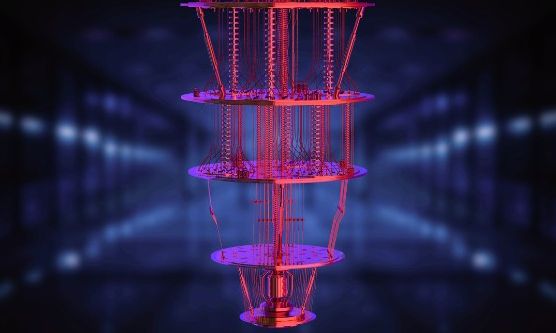
initiative. QuNorth aims to procure and manage Magne, the most advanced
gate-based quantum computer available commercially. Magne will be among the
first Level 2 quantum systems worldwide, utilizing logical qubits for
computations. This initiative will significantly enhance Denmark and the Nordic
region's research and commercial capabilities, strengthening their position in
the global landscape.
| |
Norwegian Prime Minister, Jonas Gahr
Støre, announced a NOK 1 billion investment in quantum technology over the next
five years. "Today, we are launching a historic initiative for Norway as a
technology nation. We know that quantum technology will be of great importance
for Norwegian competitiveness and national security. Norway must develop
expertise and capacity in critical technologies, which are important for our
national sovereignty.”
| | | |
Moderna and IBM have partnered up to
apply quantum technology to mRNA medicine design. “Our goal is to improve human
health. We believe it's critical to explore every available tool—including
quantum computing—to scale our progress today, rather than wait for the
technology to fully mature in the future” Alexey Galda, Associate Scientific
Director, Quantum Algorithms and Applications at Moderna.
|
IBM and AMD have unveiled plans to
craft next-generation computing frameworks by merging quantum computing with
high-performance computing, an approach referred to as quantum-centric
supercomputing. The two companies are joining forces to create scalable,
open-source platforms with the potential to revolutionize the future landscape
of computing. This collaboration leverages IBM's prowess in developing the
globe's most advanced quantum computers and software, alongside AMD's expertise
in high-performance computing and AI
| |
IonQ announced new U.S. patents that
expand its intellectual property portfolio to more than 1,000 licensed, owned,
or controlled patents and applications in trapped-ion quantum computing and
networking.
“These patents position IonQ to
continue to develop scalable, high-performance, cost-effective systems that
accelerate the timeline for unparalleled commercial quantum advantage” say Niccolo
de Masi, Chairman and CEO of IonQ.
| | | |
At Playground Global’s Next-Gen Compute
event during Deep Tech Week San Francisco, three companies: PsiQuantum, Ideon Technologies, and NVision laid out a vision
grounded not in academic research but in solving real-world problems. Their
work, although vastly different in domains, signals a broader shift underway in
quantum technology, as the field pivots from lab to application. This trend was
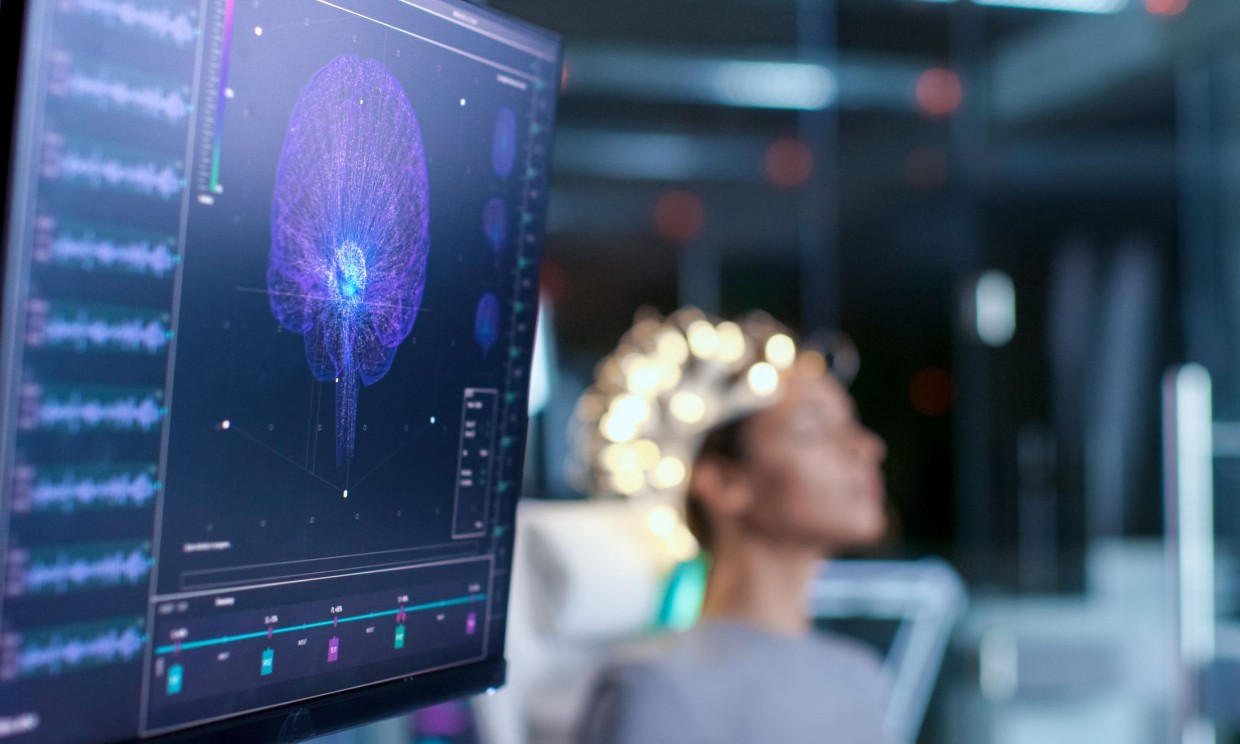
highlighted by the pressing challenges, including detecting disease, that these
companies are applying the unique advantage of quantum science to remedy.
| |
IonQ seems to be the “it” quantum
computing company of the summer, with both Amazon and Morgan Stanley Investment
Management (MSIM) disclosing large stakes in the company, which is forming a
growing roster of institutional investors.
Amazon disclosed a 36.7 million USD
stake (the largest publicly known tech company investor in a quantum hardware
company) and MSIM has disclosed a 7% stake, leading to rising expectations of
institutional interest in next-generation computing.
| | | |
D-Wave has released a new
open-source toolkit, a part of their Ocean™ software suite, that allows
developers to use quantum computers to help train AI models, which focus on
machine learning tasks such as image generation and pattern recognition. Early
collaborations have led to promising results, including improved AI training
speed and accuracy over classical methods in drug discovery, protein-DNA
analysis, and high-energy physics simulation.
| |
Microsoft CEO Satya Nadella said
quantum computing will be the next major accelerator in cloud technology,
marking a notable shift in the company’s long-term strategic focus. “The next
big accelerator in the cloud will be quantum and I’m excited about our
progress,” said Nadella. This statement and the company’s announcement of the
world’s first operational deployment of a Level 2 quantum computer, signals
Microsoft’s intent to expand beyond traditional cloud and AI infrastructure and
invest in technologies with longer time horizons.
| | | |
The Ministry of Economy, Trade and
Industry (METI) in Japan, will support major corporations such as Fujitsu and
KDDI, along with emerging startups, with roughly 50 billion yen (approximately
$335 million USD or 3,187,669,985SEK), to build out a comprehensive national
quantum ecosystem. This investment comes amid increasing competition over
quantum computing and demonstrates the Japanese government’s commitment to
compete with the US and China.
- Fujitsu
has announced plans to build a superconducting quantum computer with over
10,000 physical qubits and 250 logical qubits by fiscal 2030.
- KDDI will
lead a NEDO-funded project to develop an AI-quantum common platform aimed at
accelerating industrial use of quantum computers by fiscal 2027.
Japan has also launched a
domestically built superconducting quantum computer at Osaka University’s QIQB,
marking full national self-reliance in quantum hardware and software. It will
be a part of Expo 2025 in Osaka as a part of the public exhibit combining
remote access, interactive education, and quantum-generated art.
|
Zero Point Cryogenics, a Canadian-based
company, has received a US patent for its “Phase Separation Refrigerator”
(PSR), which is the first technology of its kind in more than 60 years. This
cryogenic system could simplify access to ultra-cold temperatures needed for
quantum research and other advanced physics applications, that need continuous
cooling below 1 kelvin.
| | | |
Environmental
Perspectives on Quantum
| Quantum news with a focus on the technology’s effect on the environment
and efforts towards sustainability. |
In a blog post by Theodore Sizer,
Head of Optical Systems and Device Research at Nokia Bell Labs he addresses, in
stark terms, that our hunger from data capacity comes at a cost to the
environment and poses an “existential problem for the communications industry”.
As the world’s data consumption increases the power required by our networks
increases as well, and we are reaching a point that is “simply unsustainable”.
Sizer states, that “on our current trajectory, data demand in 2045 will be 100
times greater than it is today… Planet Earth simply doesn’t have the natural
resources to support that kind of growth using current networking
capabilities.”
| | | |
This
opinion piece, by Anthony Hié, Chief Digital Officer at Excelia Group, covers
the important issue of data centers, sustainability, and water.
| |
Check out
this EU funded initiative, Quantum for Good which is a collaborative movement that leverages quantum technology to address
sustainability challenges like microplastics, a clean energy transition and
water use, thus empowering solutions for a sustainable future.
| | | | QSIP – Empowering Sweden´s Quantum Innovation Future | | | | | | | | | |
More About Us
Quantum Sweden Innovation Platform (QSIP) is a Swedish initiative to stimulate, foster, and promote quantum technology innovation to support the emergence and growth of a Swedish, globally competitive and attractive industry within and by means of quantum technology.
The platform will provide both individual and general support activities to enable increased innovation, application development and commercialization of quantum technology.
|
This newsletter is produced by QSIP – Quantum Sweden Innovation Platform. QSIP is hosted by Chalmers Industriteknik.
You have recieved this newsletter because you have interacted with QSIP. If you no longer wish to receive our emails, you can [unsubscribe here] at any time.
|
| | |
|
|